
In a decisive move to safeguard American technological sovereignty, President Donald Trump has officially blocked a $3 billion acquisition within the semiconductor industry. The executive intervention signals a tightening grip on the global chip supply chain and a stern warning to international investors eyeing U.S.-linked tech assets.
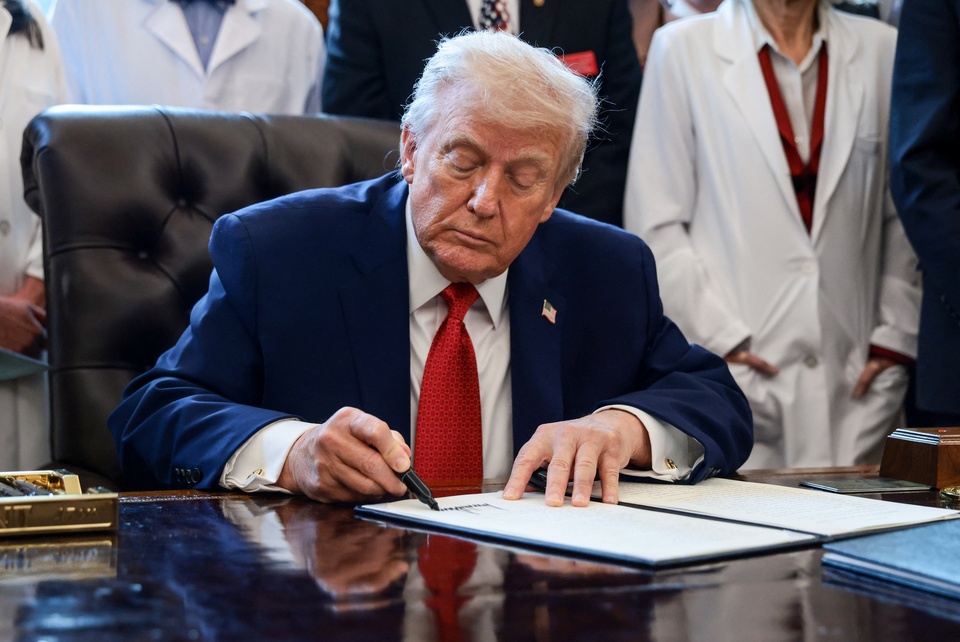
The deal, which would have seen a major consolidation in the mid-tier chip manufacturing sector, was halted following a review by the Committee on Foreign Investment in the United States (CFIUS). The President’s move underscores the administration's "America First" approach to the high-stakes AI and 5G hardware race.
1. National Security First: The Rationale Behind the Block
The White House justified the intervention by citing critical national security risks. According to administration officials, the acquisition posed a threat to the integrity of sensitive American intellectual property.
"We cannot allow our most vital technologies to be bargained away for short-term profits," President Trump stated during a press briefing. "The chip industry is the backbone of our military and economic future. We are keeping that backbone strong and American."
Analysts suggest that the administration is particularly concerned about the potential for technology "leakage" to rival global powers, specifically in the realm of advanced computing and automated systems.
2. Market Shockwaves: The Impact on Silicon Valley
The unexpected block has sent ripples through the tech-heavy Nasdaq. While some industry leaders expressed concern over increased regulatory hurdles, others praised the move as a necessary step to protect domestic innovation.
Immediate Market Impacts:
Stock Volatility: Shares of the companies involved in the merger saw a sharp decline following the announcement.
M&A Chilling Effect: Investment bankers warn that other pending cross-border tech deals may now face much stricter scrutiny, potentially slowing down global tech consolidation.
AI Hardware Premium: With the U.S. government taking a direct hand in supply chain security, companies focusing on domestic "on-shored" manufacturing are seeing a boost in investor interest.
3. The Broader Strategy: "Chip Sovereignty"
This $3 billion intervention is not an isolated event. It is a central component of a broader Trump administration strategy to decouple critical tech supply chains from foreign influence.
By leveraging the power of executive orders and CFIUS reviews, the administration is effectively creating a "Tech Fortress" around American innovation. This policy aims to force companies to invest in domestic fabrication plants (fabs) rather than seeking offshore partnerships that might compromise security protocols.
4. What This Means for Global Investors
For the global investment community, the message from Washington is clear: any deal involving semiconductors, AI, or data security will be viewed through a geopolitical lens. Investors are now being advised to prioritize "clean" supply chains that do not cross sensitive geopolitical fault lines.
Industry experts believe this could lead to a "bifurcated" tech market—one led by U.S.-approved standards and another operated by rival blocks. In this new era, the value of a tech company is no longer determined solely by its revenue, but by its strategic alignment with national security priorities.
Analysis: The End of the Globalized Chip Era?
As the President shuts down this $3 billion deal, the era of unbridled globalization in the tech sector appears to be reaching its end. The move reinforces the idea that in the 2026 economy, hardware is as much a weapon of statecraft as it is a tool for commerce. For American tech giants, the future is domestic, protected, and increasingly political.
Top Trending Queries: Trump blocks semiconductor merger, $3 billion chip deal news, CFIUS tech intervention, America First chip policy, AI supply chain security.
Disclaimer: This report is an independent analysis of recent executive actions in the technology sector. Subscribe for more deep dives into the intersection of policy and business.